Beverages Dispatch
Beverage freight is one of trucking's heaviest and most consistent categories, moving 13.8 billion cases per year across 4.2 million truckloads. A fully loaded 53ft trailer of bottled water or canned beverages hits 43,000-45,000 lbs — right at the legal limit — making weight compliance the defining challenge. The market is dominated by Coca-Cola, PepsiCo, and Anheuser-Busch InBev, whose 600+ bottling and brewing facilities generate 95,000+ loads per week. Rates average $2.70-$3.20/mile on core lanes, with summer peak (May-August) pushing rates 15-20% above baseline as consumption spikes 30%.
Seasonality & Timing
When beverages freight pays the most
Beverage demand tracks temperature — every 10degF increase in average daily temperature drives a 12-15% increase in soft drink and water consumption. Summer (May-August) is the peak, with Memorial Day, July 4th, and Labor Day creating three distinct demand spikes. Beer shipments peak for Super Bowl (late January-early February) and July 4th. Winter (November-January) is the slowest period for non-alcoholic beverages, though holiday beer and wine shipments partially offset the dip.
Handling Requirements
What it takes to haul beverages safely and compliantly
Weight management is critical — a standard 53ft load of 24-packs of water weighs 44,800 lbs, leaving only 35,200 lbs of GVW headroom with a typical tractor
Palletized loads with stretch wrap must be inspected for pallet condition — broken pallets cause load shifts that damage $15,000-$30,000 in product
Temperature-sensitive for craft beer and wine — must stay below 75degF to prevent spoilage and label damage
Multi-stop deliveries to grocery chains and convenience store DCs — 2-4 stops at $50-$75 per additional stop
Driver-assist or lumper unloading at many delivery points — budget 2-3 hours per stop for floor-loaded trailers
Compatible Truck Types
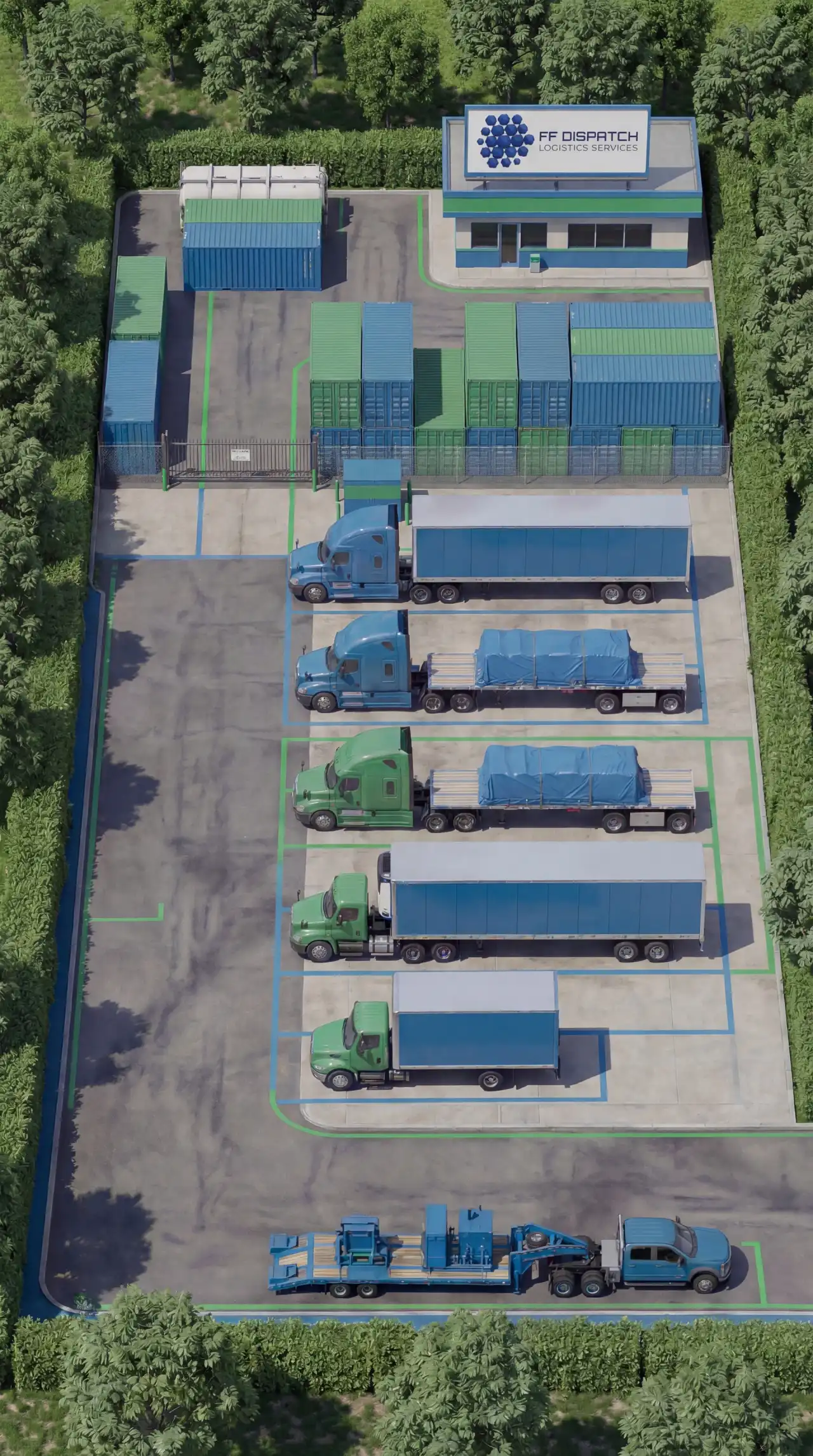
Equipment that handles beverages freight
Geographic Hotspots
Top regions for beverages freight volume and rates
Atlanta Metro (Coca-Cola HQ & Bottling)
Atlanta is ground zero for beverage freight — Coca-Cola's world headquarters and 4 major bottling facilities within 50 miles ship 12,000+ truckloads per week to every state east of the Mississippi. Outbound rates to Northeast markets average $2.80-$3.10/mile, with high reload probability from Atlanta's retail DC corridor.
San Antonio & Houston (bottling corridor)
Texas bottling operations serve the entire Southwest and South Central US. Coca-Cola's Houston mega-plant and PepsiCo's San Antonio facility generate 5,000+ loads/week. Outbound to DFW distribution centers runs 250-280 miles at $3.20-$3.60/mile (short-haul premium). Summer rates to Arizona spike to $3.40/mile as desert consumption doubles.
Inland Empire (Riverside, San Bernardino, Ontario)
The Inland Empire is the West Coast beverage distribution hub, with Monster, Red Bull, Nestlé Waters, and multiple brewing operations within a 30-mile radius. Outbound to Pacific Northwest averages $2.90-$3.20/mile, and local distribution to Southern California grocery chains pays $3.80-$4.50/mile on 50-100 mile runs.
St. Louis (Anheuser-Busch HQ & brewery)
Anheuser-Busch's St. Louis brewery is the largest single-site brewery in the US, producing 13+ million barrels annually and generating 3,500+ outbound truckloads per week. Beer loads to Southeast and East Coast pay $2.90-$3.30/mile. Backhaul from Chicago (300 miles at $3.40/mile) makes STL a highly profitable origin.
Top Lanes for Beverages
Major freight corridors where beverages loads are consistently available
I-95 Eastern Corridor
I-5 Pacific Corridor
I-40 Cross-Country Corridor
Beverages Challenges We Solve
Common obstacles for beverages carriers and how we help you overcome them
Chronic overweight risk
Beverage loads routinely push 43,000-45,000 lbs, and a single extra pallet can push the truck over 80,000 lbs GVW. Overweight fines vary by state but average $300-$1,000 for the first 2,000 lbs over, with some states (California, New York) charging $0.15-$0.25 per pound over limit. Three overweight violations in 12 months can trigger a DOT audit.
We calculate expected load weight before dispatch using product-specific weight charts (a pallet of 12oz cans = 2,100 lbs, 16.9oz bottles = 2,400 lbs). We cap beverage loads at 42,000 lbs and route through states with the most favorable weight tolerances. Every beverage carrier in our network has a lightweight tractor (under 17,000 lbs) to maximize payload capacity.
Summer heat damage
Craft beer and wine shipments are temperature-sensitive — prolonged exposure above 80degF causes skunking in beer and accelerates oxidation in wine, destroying $20,000-$50,000 in product. Even non-alcoholic beverages can have label adhesive failure and can expansion in extreme heat.
For temperature-sensitive beverage loads (craft beer, wine, premium brands), we use reefer trailers set to 55-65degF — a $0.08-$0.12/mile premium that the shipper gladly pays vs. a $30,000 claim. For standard soft drink and water loads in summer, we schedule pickups for early morning (before 9 AM) and deliveries before 3 PM to minimize heat exposure during transit.
Dispatcher Tip
The weight game is everything in beverages. Most dispatchers lose money on beverage loads because they do not check tractor weight. A standard sleeper cab weighs 19,000-21,000 lbs, which limits your payload to 38,000-40,000 lbs — that is 2 fewer pallets than a day cab at 16,000-17,000 lbs. Light-spec tractors (aluminum wheels, no bunk, aero fairing) under 17,000 lbs are gold for beverage freight because you can legally haul 2 extra pallets worth $600-$900 in additional freight revenue per load. Also, Coca-Cola and Pepsi bottling plants load fast — 30-45 minutes — and they ship 5-6 days a week with zero negotiation. The rate is the rate, but you never wait and you never deadhead.
Beverages FAQ
Common questions about hauling beverages freight
Why are beverage loads so heavy?+
Do I need a reefer for beverage loads?+
What kind of tractor is best for beverage freight?+
How often do beverage companies ship?+
Ready to Haul Beverages Freight?
Our dispatchers specialize in beverages loads. Book a call and we will build a lane plan that maximizes your revenue.