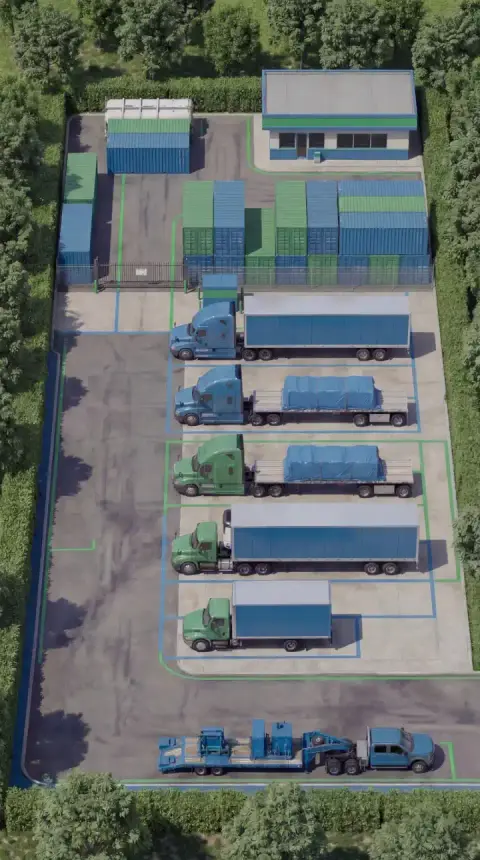

Construction Materials Dispatch
Construction freight represents a $78 billion annual market in US trucking, moving 2.8 billion tons of aggregates, steel, concrete, and building materials each year. Flatbed and step deck dominate — 70% of construction loads require open-deck equipment — with per-mile rates averaging $3.25-$3.80/mile for tarped loads. The market tracks closely with housing starts (1.4 million in 2025) and federal infrastructure spending ($550 billion from the IIJA), making it one of the most predictable high-paying freight categories when you know the seasonal cycles.
Seasonality & Timing
When construction materials freight pays the most
Construction freight follows weather patterns. Northern states (MI, OH, PA, IL) see a hard freeze from December-February that drops flatbed volumes 40-50%. Southern states (TX, FL, GA) run year-round with only a 10-15% holiday dip. The strongest rates hit in April-June when spring building season collides with DOT road projects. Infrastructure loads from IIJA-funded projects have smoothed out some winter dips since 2024.
Handling Requirements
What it takes to haul construction materials safely and compliantly
Tarping required for 60%+ of loads — 8ft lumber tarps and smoke tarps must be in good condition with no holes
Securement per FMCSA 49 CFR Part 393 — steel coils need coil racks and 4-point tie-downs rated to 1.5x load weight
Oversize/overweight permits for loads exceeding 8.5ft wide, 13.5ft tall, or 80,000 lbs — permit costs $50-$300 per state
Flagging and escort requirements for wide loads (over 10ft) vary by state — some require pilot cars at $1.50-$2.50/mile
Load boards and edge protectors to prevent chain/strap damage on lumber and steel beams
Compatible Truck Types
Equipment that handles construction materials freight
Flatbed
Open-deck trailer for oversized, heavy, and irregularly shaped freight
View Flatbed DetailsStep Deck
Lower deck height for taller freight without oversize permits
View Step Deck DetailsDry Van
The most versatile enclosed trailer, ideal for palletized and floor-loaded freight
View Dry Van DetailsHotshot
Expedited delivery with medium-duty trucks for time-critical freight
View Hotshot DetailsPower Only
Tractor-only service hauling shipper-owned trailers
View Power Only DetailsGeographic Hotspots
Top regions for construction materials freight volume and rates
Dallas-Fort Worth, Houston, Austin
Texas leads the nation in construction permits and housing starts. DFW alone issued 48,000+ residential permits in 2024. Steel and lumber loads from Houston ports to job sites across the state pay $3.40-$3.90/mile. Austin's tech-driven commercial construction keeps flatbed demand steady even during national slowdowns.
Orlando, Tampa, Jacksonville
Florida's population growth of 365,000+/year drives non-stop residential and commercial construction. The I-4 corridor between Orlando and Tampa is the densest construction zone in the Southeast. Year-round building season means no winter freight drop — flatbed rates hold $3.20-$3.60/mile from October through March when Northern states go quiet.
Denver Metro & Front Range
Denver-area construction spending exceeded $15 billion in 2024, driven by data center builds and residential expansion. Steel loads from Pueblo mills to Denver job sites run 120 miles at $4.80-$5.50/mile (short-haul premium). Mountain highway projects along I-70 generate oversized concrete barrier loads at $4.00+/mile with escort.
Charlotte, Raleigh-Durham (Research Triangle)
North Carolina's construction boom mirrors its tech migration wave. Charlotte added 22,000 housing units in 2024, and the Research Triangle is the fastest-growing data center market on the East Coast. Inbound steel and roofing material loads from Virginia and South Carolina pay $3.10-$3.40/mile with consistent daily volume.
Top Lanes for Construction Materials
Major freight corridors where construction materials loads are consistently available
Construction Materials Challenges We Solve
Common obstacles for construction materials carriers and how we help you overcome them
Weather-dependent volume swings
A 2-week cold snap in the Midwest can zero out flatbed volumes overnight. Carriers in Northern states often see 40-50% revenue drops from December through February, with no warning beyond a weather forecast.
We build seasonal lane plans for every flatbed carrier: Northern construction loads April-October, then pivot to Southern states (TX, FL, GA) or energy sector loads for the winter. Carriers who follow our seasonal migration plan maintain 85%+ utilization year-round vs. the 55-60% industry average.
Tarping and securement time
Tarping a 48ft flatbed load takes 30-60 minutes and is physically demanding. Many drivers skip tarping or do it poorly, leading to $5,000-$20,000 cargo damage claims when materials get wet or shift. Proper securement of steel beams requires 45 minutes and 12+ binder chains.
We negotiate tarping fees ($75-$150 per load) as a line item on every rate confirmation. For steel and heavy material loads, we only assign carriers with roller tarps or conestoga trailers that cut tarping time to under 10 minutes. We also negotiate no-tarp premiums — many commercial shippers waive tarping for an extra $0.05/mile.
Overweight citations
Construction materials are dense — a load of concrete blocks or steel plate can hit 48,000 lbs on a 48ft flatbed, pushing gross weight over 80,000 lbs. Overweight fines range from $150-$16,000 depending on state and amount over, and three violations put your FMCSA score at risk.
Our dispatchers calculate load weight before booking using material density tables. For borderline loads (44,000+ lbs), we route through states with higher weight tolerances or require certified scale tickets before departure. We reject loads over 46,000 lbs on standard flatbed unless the shipper provides overweight permits.
Dispatcher Tip
The best-kept secret in construction freight is the material supplier network. Forget the load boards — call the 20 biggest lumber yards, steel service centers, and concrete batch plants within 100 miles of your driver. These guys ship 50-100 loads a week and hate dealing with brokers. A direct relationship with a steel service center in Houston or a lumber distributor in Portland gives you $3.50+/mile loads 5 days a week with no broker cut. Also, always check for backhaul from job sites. Excavation companies often need empty flatbeds to haul equipment between sites — it is ugly freight but it pays $2.50/mile and fills a deadhead.
Construction Materials FAQ
Common questions about hauling construction materials freight
What type of trailer do I need for construction loads?+
How much do construction loads pay per mile?+
Is construction freight affected by housing market downturns?+
Do I need special endorsements for construction materials?+
Ready to Haul Construction Materials Freight?
Our dispatchers specialize in construction materials loads. Book a call and we will build a lane plan that maximizes your revenue.