Hazmat & Chemical Dispatch
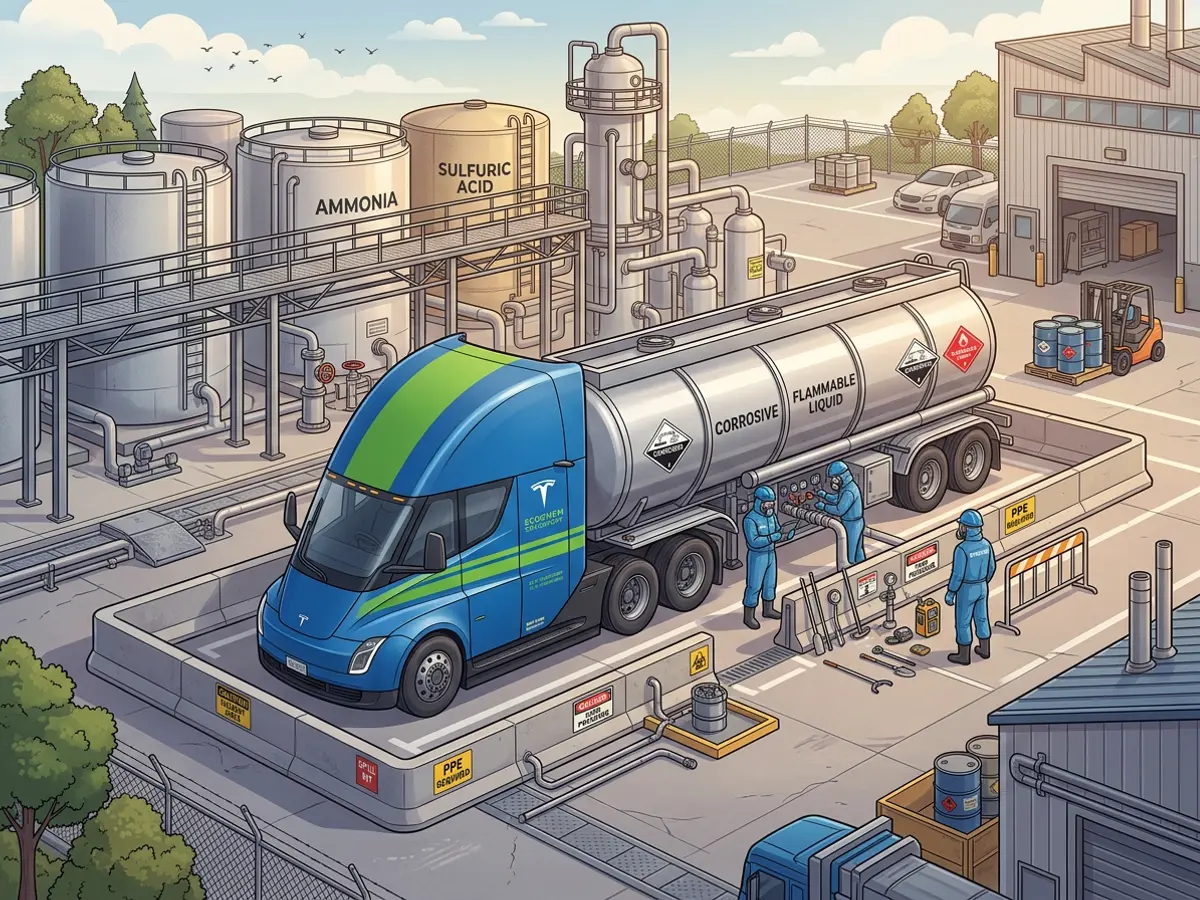
Hazmat freight encompasses the transport of flammable liquids, corrosive chemicals, compressed gases, explosives, and radioactive materials — a $28 billion annual US market that requires DOT HazMat endorsements, specialized equipment, and compliance with 49 CFR Parts 171-180. Only 6.8% of CDL holders carry a HazMat endorsement, creating a permanent capacity shortage that drives rates 40-80% above dry van. Tanker loads of industrial chemicals average $3.80-$4.60/mile, with specialized hazmat flatbed (UN cylinders, IBCs) paying $3.40-$4.00/mile. The chemical corridor from Houston to New Jersey moves 40% of US hazmat volume and is the highest-paying consistent lane in trucking.
Seasonality & Timing
When hazmat & chemical freight pays the most
Hazmat freight follows industrial production cycles. Spring (March-May) ramps with agricultural chemicals (herbicides, fertilizers) and construction chemicals (adhesives, coatings). Summer is steady with gasoline distribution and industrial chemical production. Fall (September-November) peaks with heating oil distribution and year-end chemical inventory builds. December-January dips 15-20% during plant shutdowns, but baseline hazmat demand (fuel, industrial chemicals) never truly stops because factories and heating systems run year-round.
Handling Requirements
What it takes to haul hazmat & chemical safely and compliantly
DOT HazMat endorsement (H on CDL) required for all drivers — $50-$100 testing fee, TSA background check, 5-year renewal
Tanker endorsement (N on CDL) additionally required for liquid chemical loads over 119 gallons or 1,000 lbs
Proper placarding per 49 CFR 172 — wrong placard class is a $1,000+ fine and automatic Out-of-Service violation
Shipping papers with proper UN number, shipping name, hazard class, packing group, and 24-hour emergency contact
Spill kit on every truck — 15-gallon absorbent capacity minimum for liquid loads
Route restrictions: HazMat trucks cannot use certain tunnels (e.g., Lincoln Tunnel, Fort McHenry Tunnel) and must follow FMCSA-designated routes in populated areas
Vehicle inspection every 2 years (vs. annual for non-hazmat), plus pre-trip inspection documented in writing
Compatible Truck Types
Equipment that handles hazmat & chemical freight
Dry Van
The most versatile enclosed trailer, ideal for palletized and floor-loaded freight
View Dry Van DetailsFlatbed
Open-deck trailer for oversized, heavy, and irregularly shaped freight
View Flatbed DetailsStep Deck
Lower deck height for taller freight without oversize permits
View Step Deck DetailsHotshot
Expedited delivery with medium-duty trucks for time-critical freight
View Hotshot DetailsGeographic Hotspots
Top regions for hazmat & chemical freight volume and rates
Houston Ship Channel & Gulf Coast (Baytown, Texas City, Pasadena)
The Houston petrochemical complex is the single largest origin of hazmat freight in North America, with 400+ chemical plants and refineries within 50 miles. Outbound tanker loads to Midwest manufacturers average $4.20-$5.00/mile. Flatbed loads of industrial chemicals in IBCs/drums pay $3.60-$4.20/mile. The Houston-to-New-Jersey lane runs 1,600 miles at $4.40/mile — the best-paying consistent lane in US trucking.
NJ Chemical Corridor (Linden, Elizabeth, Newark)
New Jersey's chemical industry — the densest in the US — includes BASF, Dow, and 200+ specialty chemical manufacturers. Inbound tanker loads from Houston/Gulf Coast are the primary volume driver at $4.20-$4.60/mile. Local distribution of chemicals to manufacturers across the Northeast pays $4.50-$5.50/mile on 50-200 mile runs due to urban congestion and strict NJ routing requirements.
Chicago South Side & Joliet industrial corridor
Chicago's chemical distribution hub serves manufacturers across the entire Midwest. Inbound hazmat from Houston and Gulf Coast averages $4.00-$4.40/mile on the 1,100-mile lane. Local chemical distribution within 200 miles of Chicago pays $4.00-$5.00/mile. Joliet's intermodal yards also generate hazmat container dray at $400-$600 per container.
Philadelphia & Delaware Valley chemical plants
The Philadelphia refinery corridor and Delaware Valley chemical plants (DuPont legacy operations, Braskem, Evonik) generate 2,000+ hazmat loads per week. Tanker loads from Philly refineries to Southeastern distributors average $3.80-$4.40/mile. Specialty chemical loads to pharmaceutical plants in NJ/PA pay $4.50-$5.50/mile with strict delivery window requirements.
Hazmat & Chemical Challenges We Solve
Common obstacles for hazmat & chemical carriers and how we help you overcome them
Regulatory complexity and violation risk
Hazmat regulations span 1,500+ pages across 49 CFR Parts 171-180, with violations starting at $1,000 per offense and serious incidents triggering fines of $79,976 per violation (2025 max). The most common violations — incorrect placarding, missing shipping papers, and expired HazMat endorsements — account for 65% of hazmat fines and result in immediate Out-of-Service orders.
Every hazmat dispatch from our team includes a compliance checklist covering UN number verification, placard class confirmation, shipping paper completeness, and route restriction review. We conduct quarterly compliance audits for all carriers in our hazmat pool and remove any carrier with an Out-of-Service violation within the past 12 months. Our pre-trip verification calls with drivers take 5 minutes and prevent 90% of common violations.
Insurance cost barrier
Hazmat cargo insurance premiums are 3-5x higher than standard cargo coverage. A $1M hazmat policy costs $15,000-$25,000/year vs. $4,000-$6,000 for standard dry van. Pollution liability coverage (required by most chemical shippers) adds another $5,000-$12,000/year. These costs price out 80% of carriers who might otherwise pursue hazmat freight.
We help new hazmat carriers offset insurance costs through load volume guarantees — a carrier hauling 8+ hazmat loads per month earns enough in rate premiums ($800-$1,500/load above dry van) to cover the additional insurance cost within the first month. We also connect carriers with hazmat-specialized insurance brokers who offer 20-30% lower premiums than generalist agents by accurately underwriting the risk.
Spill liability and cleanup costs
A hazmat spill on a public highway triggers EPA emergency response, with cleanup costs averaging $75,000-$500,000 depending on the substance and spill size. The responsible carrier can face civil penalties of $50,000+ per day and criminal charges for negligent transport. Even a minor 5-gallon spill can close a highway for 6-12 hours.
We require spill response training documentation for every driver in our hazmat pool and verify spill kit inventory before every dispatch. For high-risk chemicals (strong acids, flammable liquids with flash points below 100degF), we arrange loads on routes that avoid schools, hospitals, and water treatment facilities. Our emergency response contacts include 24/7 hazmat cleanup companies in every major metro area.
Dispatcher Tip
Hazmat is the highest barrier-to-entry freight in trucking, which is exactly why it pays so well. The carriers who get rich in hazmat are not the ones running corrosive acid tankers — it is the dry van and flatbed guys hauling Class 9 miscellaneous hazmat (lithium batteries, dry ice, environmentally hazardous substances). Class 9 loads pay $3.40-$4.00/mile, require only a basic HazMat endorsement (no tanker), and the liability risk is a fraction of Class 3 or 8 chemicals. Start with Class 9 loads from Amazon and FedEx (lithium battery shipments are exploding in volume) and work your way up to higher-class chemicals as you build experience and insurance history. Also, the Houston-to-NJ chemical lane is gold — get in with 2-3 chemical distributors in Pasadena or Baytown and you will never chase freight again.
Hazmat & Chemical FAQ
Common questions about hauling hazmat & chemical freight
What endorsements do I need to haul hazmat?+
How much more does hazmat freight pay vs. regular freight?+
What are the most common hazmat loads for truckers?+
Is hazmat trucking more dangerous than regular trucking?+
Ready to Haul Hazmat & Chemical Freight?
Our dispatchers specialize in hazmat & chemical loads. Book a call and we will build a lane plan that maximizes your revenue.