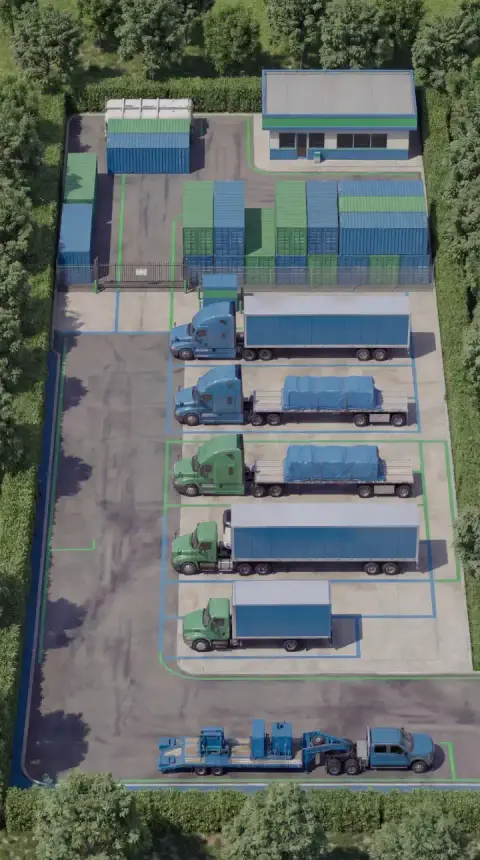
Cross-Dock
Cross-docking is a logistics practice where freight is transferred directly from an inbound truck to an outbound truck at a facility with minimal or no warehousing time.
What Is Cross-Dock?
Cross-docking is a distribution strategy where incoming freight is unloaded from one truck, sorted, and immediately loaded onto outbound trucks headed to the final destination — with little to no storage time in between. The freight literally crosses from one dock door to another, hence the name. Cross-dock facilities are designed for rapid throughput rather than storage.
For carriers, cross-dock operations mean you may be delivering to a facility where your freight is immediately transferred to another truck rather than being stored in a warehouse. This can affect your loading and unloading experience — cross-dock facilities are often high-volume operations with strict appointment scheduling and specific dock door assignments. Wait times can vary: well-run cross-docks are very efficient (under 1 hour), but overwhelmed ones can have excessive delays.
Cross-docking is particularly common in retail (Walmart, Target), grocery distribution, and e-commerce. It reduces warehouse costs and speeds up delivery times. For carriers, understanding cross-dock operations helps you anticipate what to expect at certain facilities and plan your schedule accordingly.
Why It Matters
Cross-dock facilities can be very efficient or very slow depending on volume and management. Knowing you are delivering to a cross-dock helps you plan for potential delays and ensure detention terms are in your rate confirmation in case of extended wait times.
Real-World Example
Ray delivers a dry van load of consumer goods to a Walmart cross-dock facility in Smyrna, TN. His freight is immediately sorted and loaded onto three different outbound trucks heading to individual Walmart stores. The entire process takes 45 minutes — one of the fastest unloads Ray has experienced. The next week, the same facility is backed up with holiday freight and Ray waits 5 hours. His FF Dispatch dispatcher files a detention claim for 3 hours at $50/hour = $150 because the rate confirmation included detention terms.
How FF Dispatch Handles This
FF Dispatch tracks facility performance at major cross-docks and can tell you typical wait times before you accept the load. We include detention clauses for cross-dock deliveries to protect you from unpredictable delays.
Frequently Asked Questions
How is cross-docking different from a regular warehouse delivery?+
Are cross-dock facilities faster or slower for drivers?+
Do I need to do anything different when delivering to a cross-dock?+
Have Questions About Cross-Dock?
Our dispatchers explain everything in plain English. Book a free 15-minute call — no pressure, no contracts.
Book a Free Call