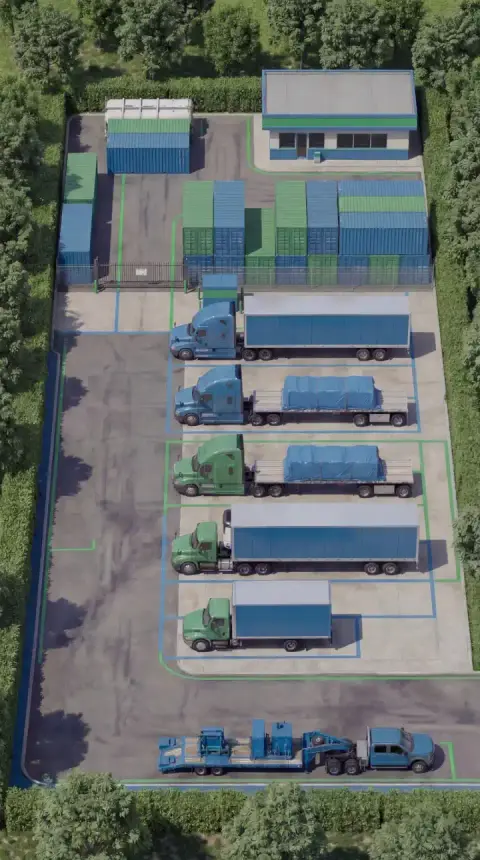
Live Load/Unload
Live loading and unloading means the driver waits at the facility while freight is physically loaded onto or removed from their trailer in real-time.
What Is Live Load/Unload?
Live loading (at pickup) and live unloading (at delivery) means you wait at the facility while your trailer is loaded or unloaded in real-time. You stay with your truck and trailer throughout the process, which typically takes 1-4 hours depending on the freight type, facility efficiency, and volume. This is the most common loading method in trucking, used by the majority of shippers and receivers.
Live loading times vary significantly by facility and commodity. Produce and refrigerated facilities often load in 1-2 hours. Retail distribution centers average 2-3 hours. Building materials and industrial loads can take 3-4+ hours. Some notorious facilities regularly take 5-6 hours, eating deeply into your available driving time. Understanding typical load times at specific facilities helps you plan your schedule and HOS accordingly.
The main disadvantage of live loading is the time cost. Every hour you spend waiting at a dock is an hour you are not driving revenue miles. With an 11-hour driving limit, losing 3 hours at a dock means you can only cover about 450 miles that day instead of 600+ miles. This is why detention pay is so important for live load facilities — and why drop trailer programs are preferred when available.
Why It Matters
Live load/unload time is the biggest time cost in trucking after driving itself. A carrier who averages 3 hours per stop loses 15+ hours per week to facility time. Factoring this time into your load decisions and ensuring detention clauses are in your rate confirmation directly protects your income.
Real-World Example
Kevin has two load options for the same lane. Load A is a live load at a facility known for 4-hour average load times, paying $3.00/mile for 400 miles. Load B is a drop and hook at $2.80/mile for the same 400 miles. Load A total time: 4 hours loading + 7 hours driving = 11 hours, pay = $1,200. Load B total time: 0.5 hours hook + 7 hours driving = 7.5 hours, pay = $1,120. Load B earns $80 less but saves 3.5 hours — time Kevin uses to pick up another $800 load that evening. His FF Dispatch dispatcher helps him see the bigger picture.
How FF Dispatch Handles This
FF Dispatch includes detention clauses on every live load rate confirmation. We also track facility load times so we can warn you before you accept a load at a slow facility, and we factor live load times into your HOS planning to prevent missed appointments.
Frequently Asked Questions
How long does a typical live load take?+
Can I get detention pay during live loading?+
Is live loading or drop trailer better?+
Have Questions About Live Load/Unload?
Our dispatchers explain everything in plain English. Book a free 15-minute call — no pressure, no contracts.
Book a Free Call