Pharmaceuticals & Medical Dispatch
Pharmaceutical freight is the highest-value, most regulated category in trucking, with the average load valued at $750,000-$2.5 million and some gene therapy shipments exceeding $10 million per pallet. The US pharma logistics market is worth $22 billion annually, with 850,000+ temperature-controlled shipments per year. Carriers must maintain GDP (Good Distribution Practice) compliance, and a single temperature excursion can destroy an entire $1.2 million load of insulin or biologics. Rates run $4.00-$6.50/mile, reflecting the extreme insurance requirements and handling standards.
Seasonality & Timing
When pharmaceuticals & medical freight pays the most
Pharma freight peaks during flu season preparation (September-November) when vaccine distribution ramps to 180+ million doses nationwide, and in Q1 when insurers reset deductibles, driving prescription refill volume up 20-30%. Summer is the slowest period for prescription volume, but clinical trial shipments (temperature-sensitive samples) run year-round. COVID and RSV vaccine distribution has added a permanent October-December surge of 15-20% since 2021.
Handling Requirements
What it takes to haul pharmaceuticals & medical safely and compliantly
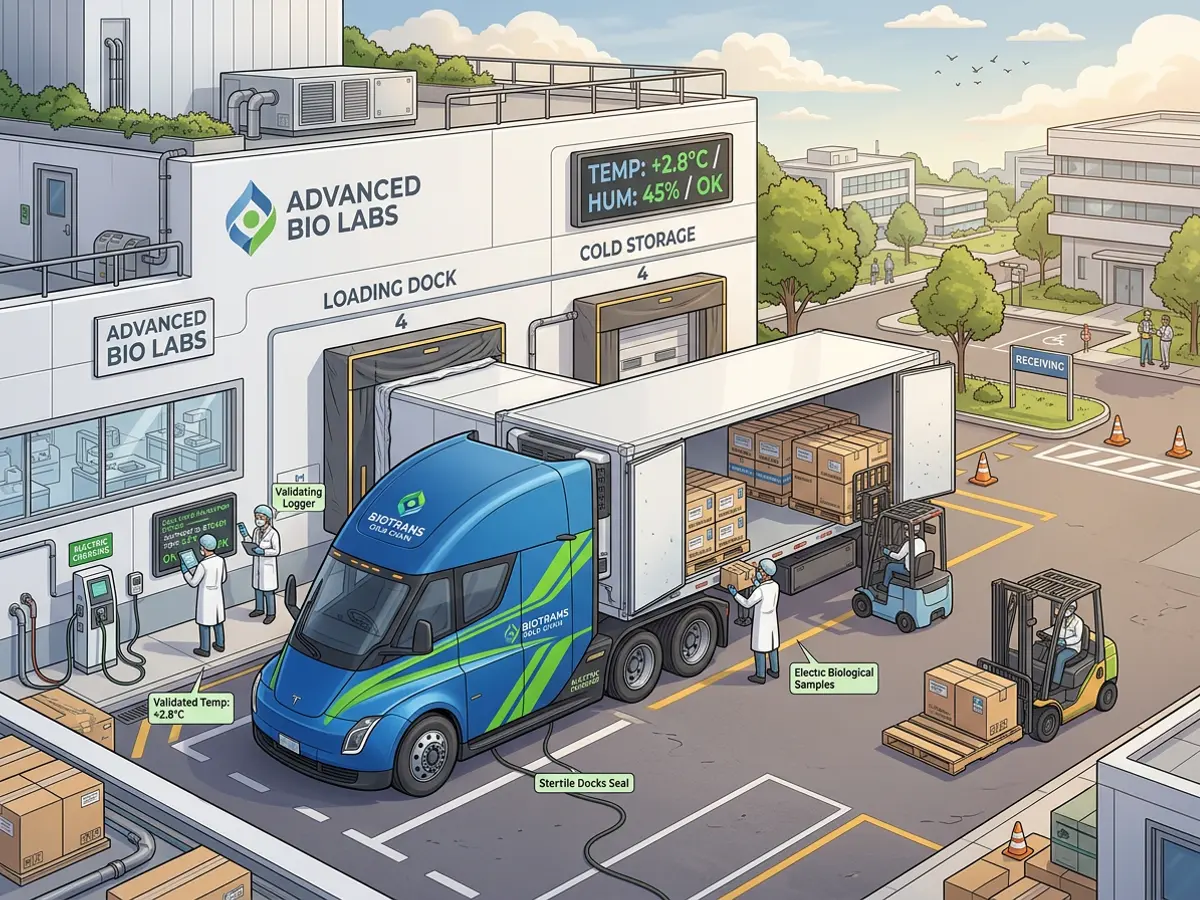
Temperature-controlled transport at precise ranges: 2-8degC (vaccines, biologics), 15-25degC (most oral medications), -20degC (certain biologics and gene therapies)
Continuous temperature monitoring with calibrated data loggers — 15-minute recording intervals required by FDA and most shippers
GDP-compliant SOPs documented for receiving, handling, transport, and delivery of pharmaceutical products
Chain of custody documentation with timestamped handoff signatures at every transfer point
Background checks and security protocols for drivers — DEA Schedule II-V controlled substance loads require additional clearances
Tamper-evident seals on every load — broken seal = rejected shipment regardless of temperature compliance
Compatible Truck Types
Equipment that handles pharmaceuticals & medical freight
Reefer
Temperature-controlled trailer for perishable and temperature-sensitive loads
View Reefer DetailsDry Van
The most versatile enclosed trailer, ideal for palletized and floor-loaded freight
View Dry Van DetailsBox Truck
Smaller enclosed trucks for urban deliveries and last-mile freight
View Box Truck DetailsGeographic Hotspots
Top regions for pharmaceuticals & medical freight volume and rates
NJ Pharma Corridor (New Brunswick, Bridgewater, Parsippany)
New Jersey is home to 14 of the top 20 global pharma companies, including J&J, Merck, Novartis, and Sanofi. The I-287/Route 202 corridor generates 3,500+ pharma loads per week. Outbound rates to Midwest distribution centers average $4.50-$5.50/mile, with controlled-substance loads commanding $6.00+/mile.
Indianapolis (Eli Lilly HQ & McKesson DC)
Indianapolis is the pharma distribution hub of the Midwest, with Eli Lilly's 100-acre manufacturing campus and McKesson's 700,000 sq ft DC shipping to 8,000+ pharmacies across 20 states. Temperature-controlled loads from Indy to regional pharmacies pay $4.00-$4.80/mile on 300-500 mile lanes.
Research Triangle (Raleigh, Durham, Chapel Hill)
The Research Triangle Park houses 50+ pharma and biotech companies including Pfizer, Merck, and Biogen manufacturing facilities. Clinical trial sample shipments (ultra-cold, -80degC) to hospital networks pay $8.00-$12.00/mile due to extreme handling requirements. Standard pharma outbound averages $4.20-$5.00/mile.
San Francisco Bay Area & San Diego
California's biotech corridor (Genentech in South SF, Amgen in Thousand Oaks, Illumina in San Diego) generates high-value biologic shipments. A single reefer load of Genentech's cancer drugs can be worth $8 million+. Rates to East Coast distribution centers average $5.00-$6.50/mile with mandatory dual-driver teams for loads over $2M in value.
Top Lanes for Pharmaceuticals & Medical
Major freight corridors where pharmaceuticals & medical loads are consistently available
Pharmaceuticals & Medical Challenges We Solve
Common obstacles for pharmaceuticals & medical carriers and how we help you overcome them
Temperature excursion liability
A 30-minute temperature excursion outside the 2-8degC range can render a $1.2 million insulin shipment worthless. Pharma cargo claims average $285,000 per incident — the highest of any freight category. Standard cargo insurance ($100,000 coverage) does not come close to covering a pharma loss.
We only dispatch pharma loads to carriers with $1M+ cargo insurance and proven reefer units less than 3 years old. Every pharma carrier in our network has backup reefer protocols — if the primary unit fails, a pre-positioned recovery trailer is dispatched within 2 hours to transfer the load. We also verify data logger calibration certificates before every shipment.
DEA and controlled substance regulations
Transporting Schedule II-V controlled substances requires DEA registration, specific security protocols, and chain-of-custody documentation. Violations carry criminal penalties including imprisonment. Only 3-5% of carriers are qualified for controlled substance transport, creating chronic capacity shortages.
We maintain a vetted pool of 50+ DEA-registered carriers with clean background checks, GPS tracking, and tamper-evident seal protocols. For high-value controlled substance loads, we arrange armed escort or dual-driver teams with real-time monitoring. Our dispatchers are trained on DEA 21 CFR Part 1301 requirements to ensure every load is compliant.
Strict facility access procedures
Pharma manufacturing facilities and distribution centers have multi-step security check-ins that take 45-90 minutes, including ID verification, vehicle inspection, temperature verification, and dock assignment. Drivers unfamiliar with the process can lose 2+ hours.
We create facility-specific instruction packets for every pharma delivery point — including security procedures, dock locations, required PPE, and contact numbers. Drivers who run recurring pharma lanes get pre-approved in facility systems, cutting check-in from 90 minutes to 15. We also schedule deliveries during off-peak hours (6-8 AM) when security lines are shorter.
Dispatcher Tip
Pharma is the hardest category to break into and the hardest to leave once you are in. The entry barrier is the $1M+ cargo insurance ($8,000-$12,000/year premium), GDP training for your drivers ($500-$800 per driver), and 6+ months of proving your temperature compliance record. But once a pharma shipper trusts you, they pay $4.50+/mile and never haggle — because the cost of a failed delivery ($1M+ destroyed product) dwarfs the $500/load rate difference. Start with medical device loads (lower value, $100K-$300K per load) to build your pharma track record, then graduate to biologics and vaccines after 12 months of perfect performance.
Pharmaceuticals & Medical FAQ
Common questions about hauling pharmaceuticals & medical freight
How much cargo insurance do I need for pharmaceutical loads?+
What temperature ranges do pharmaceutical loads require?+
Can I haul pharmaceuticals with a standard reefer trailer?+
What is GDP compliance and do I need it?+
Ready to Haul Pharmaceuticals & Medical Freight?
Our dispatchers specialize in pharmaceuticals & medical loads. Book a call and we will build a lane plan that maximizes your revenue.